
THE WONDERFUL PROCESS OF MAKING NEW HOMES IN NORTH LONDON
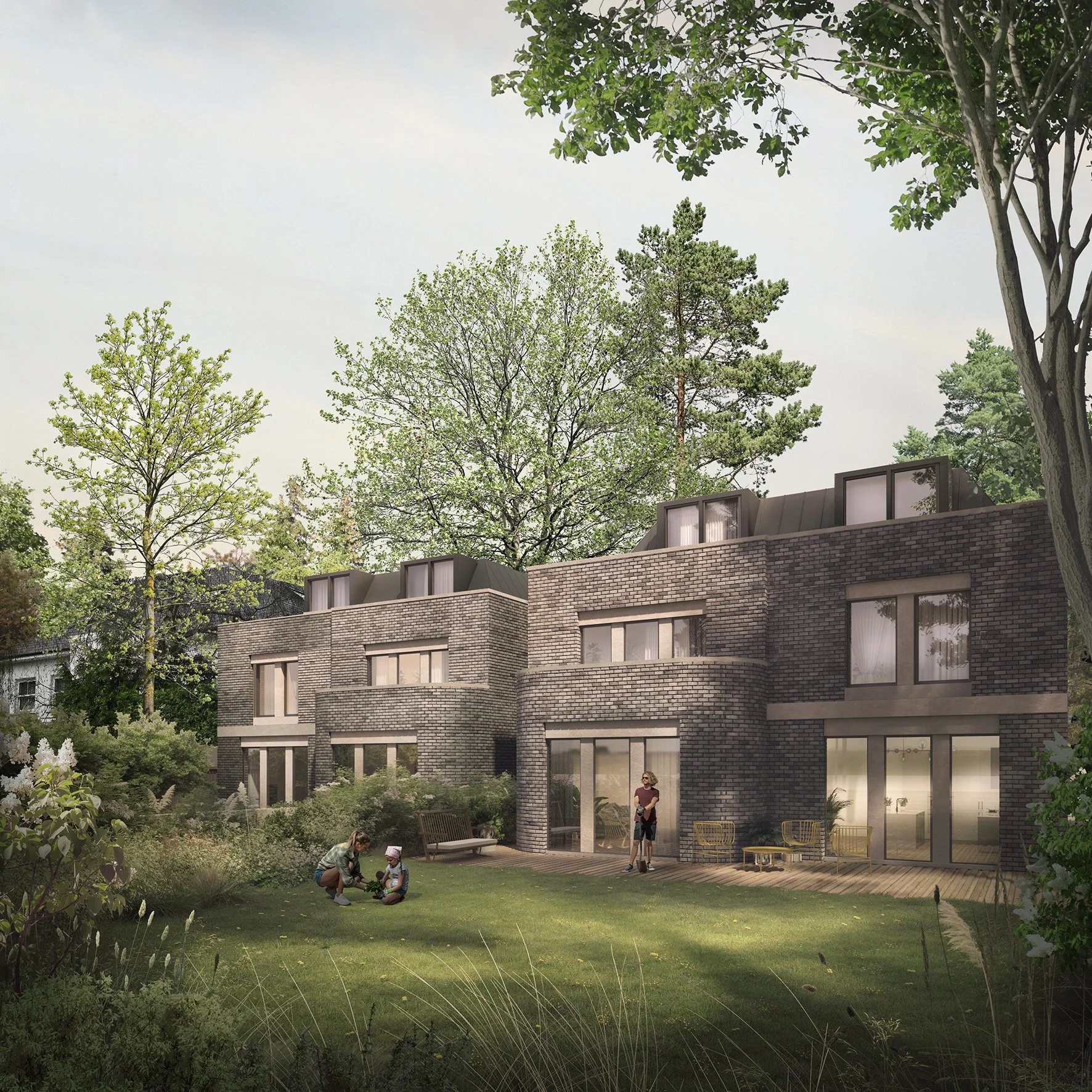
From Dereliction to Design: Shaping Two New Homes in Totteridge
Every project begins with a question rather than an answer. On this site, the starting point was a derelict house that had long outlived its usefulness. Rather than assuming demolition and rebuild were the only route forward, we began by appraising the full range of possibilities: refurbishment, a single replacement dwelling, two new houses, or a small flatted scheme. Each option was tested against planning policy, local character, technical feasibility, and commercial reality.
Early-stage appraisal is where architecture adds real value. By carefully assessing planning risk and engaging with local feedback, we were able to steer the project towards an approach that balanced ambition with pragmatism. Two well-designed houses emerged as the optimum solution—providing high-quality homes while sitting comfortably within the scale and grain of the surrounding neighbourhood.
Crucially, this was not a confrontational planning process. Through constructive dialogue and close collaboration withBarnet Planning Department, the scheme evolved into something genuinely supported by officers. The result was a strong and confident planning permission—one that unlocked the site’s potential rather than merely meeting minimum requirements.
With planning secured, the project moved into detailed design. This is where ideas are tested and refined: selecting materials that are robust, contextual, and elegant; shaping interiors around how the homes will actually be lived in; and working closely with our client to ensure the architecture reflects both aspiration and budget. Alongside this, the scheme was developed to meet stringent Building Regulations, particularly around fire safety, thermal performance, and sustainability—areas where careful coordination and early technical thinking are essential.
Throughout this stage, we coordinated closely with structural engineers, services engineers, and landscape designers to ensure that every element of the design worked together seamlessly. Good buildings are not the product of isolated decisions, but of clear communication and shared intent across the whole design team.
As the project progressed towards construction, we led the tender process to identify a high-quality contractor offering genuine value. Once on site, our role has continued as project manager and architect—monitoring quality, managing progress, and resolving issues as they arise to ensure the built reality matches the intent of the design.
The houses are now taking shape, and we are on track for completion this coming summer. What began as a neglected site is becoming a pair of thoughtfully designed homes—carefully considered from first feasibility sketch to final brick and detail. It’s a reminder that good architecture is not just about the finished object, but about guiding a complex process with clarity, care, and conviction.